
On the path of exploring Qigong. Or in another words one of the toughest of all internal arts.
Either I have very poor memory, or forget suffering easily, or the so 20 years of triathlon training seems to attest to it.
Now I see, and completely understand why so many would ask, “hey, what do you mean Qigong is tough? – It seems to be so relaxing and mainly for the elderly interesting.”
When I joined Damo Mitchell and Lotus Nei Gong in 2016, at the annual Sweden retreat, I just stood there in the training hall, and asked myself: ” Adam, did you really finished your triathlon career to do this? This much pain again? ”
Just later on I found out it is not only sometimes deeper bodily sacrifice, but can be tough mentally and emotionally to, let alone spiritually. So how come than, everyone thinks Qigong is the softest nicest and I am claiming here it is strong competition in pain with the highly taxing triathlon training? It must be some truth in it , right?
It is not exactly the pain only, but the complexity and depth. The subtle realms, the mental qualities and resilience and perseverance. And clarity at all times, amongst any circumstance.
The human fabric is multilayered. Examining it seems to me to be science and at the same time a continually changing process, a transformation by daily practise over years and decades.
My conclusion is, the main confusing factor for people to use the same term: Qigong for many things, which obviously are not that. And that is it. Everything has the right to exist, only call them by their own, right name.
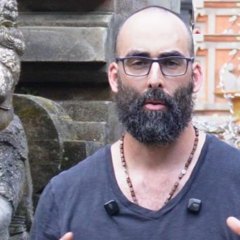
Photo: Reinhard Pacejka
Auf dem Weg, Qi Gong zu erforschen. Oder anders gesagt: eine der härtesten aller inneren Künste.
Entweder habe ich ein sehr schlechtes Gedächtnis, oder ich vergesse Leiden leicht, oder die gut 20 Jahre Triathlontraining scheinen das zu bezeugen.
Jetzt sehe ich und verstehe vollkommen, warum so viele fragen würden: „Hey, wie meinst du das, Qi Gong ist hart? Es scheint doch so entspannend zu sein und hauptsächlich für ältere Menschen interessant.“
Als ich mich 2016 beim jährlichen Retreat in Schweden Damo Mitchell und Lotus Nei Gong anschloss, stand ich einfach in der Trainingshalle und fragte mich: „Adam, hast du wirklich deine Triathlonkarriere beendet, um das hier zu machen? Schon wieder so viel Schmerz?“
Erst später fand ich heraus, dass es nicht nur manchmal ein tieferes körperliches Opfer ist, sondern auch mental und emotional hart sein kann, ganz zu schweigen von spirituell. Wie kommt es also, dass alle Qi Gong für das Sanfteste und Netteste halten, während ich hier behaupte, dass es dem äußerst fordernden Triathlontraining in Sachen Schmerz starke Konkurrenz macht? Da muss doch etwas Wahres dran sein, oder?
Es ist nicht nur der Schmerz allein, sondern die Komplexität und die Tiefe. Die subtilen Bereiche, die mentalen Qualitäten und die Widerstandskraft und Ausdauer. Und Klarheit zu jeder Zeit, unter allen Umständen.
Das menschliche Gefüge ist vielschichtig. Es zu untersuchen scheint mir eine Wissenschaft zu sein und zugleich ein sich ständig wandelnder Prozess, eine Transformation durch tägliches Üben über Jahre und Jahrzehnte.
Mein Fazit ist: Der Hauptgrund für die Verwirrung ist, dass die Leute denselben Begriff, Qi Gong, für viele Dinge verwenden, die das offensichtlich nicht sind. Und das ist alles. Alles hat ein Recht zu existieren, man sollte es nur bei seinem eigenen, richtigen Namen nennen.
Foto: Reinhard Pacejka
A csikung felfedezésének útján. Vagy más szóval: az összes belső művészet közül az egyik legkeményebb.
Vagy nagyon rossz a memóriám, vagy könnyen elfelejtem a szenvedést, vagy a nagyjából 20 évnyi triatlonedzés látszik ezt igazolni.
Most már látom, és teljesen megértem, miért kérdezik oly sokan: „Hé, hogy érted, hogy a csikung kemény? Olyan pihentetőnek tűnik, és főleg az időseket érdekli.”
Amikor 2016-ban, az éves svédországi elvonuláson csatlakoztam Damo Mitchellhez és a Lotus Nei Gonghoz, csak álltam ott a gyakorlóteremben, és megkérdeztem magamtól: „Ádám, tényleg azért fejezted be a triatlonkarriered, hogy ezt csináld? Megint ennyi fájdalom?”
Csak később jöttem rá, hogy ez nemcsak néha mélyebb testi áldozat, hanem mentálisan és érzelmileg is kemény lehet, a spirituális oldalról nem is beszélve. Hogy lehet akkor, hogy mindenki a csikungot tartja a legpuhább, legkedvesebb dolognak, én pedig itt azt állítom, hogy fájdalomban komoly vetélytársa a rendkívül megterhelő triatlonedzésnek? Kell, hogy legyen benne valami igazság, nem?
Nem pontosan csak a fájdalomról van szó, hanem az összetettségről és a mélységről. A finom tartományokról, a mentális minőségekről, az ellenállóképességről és a kitartásról. És a tisztánlátásról mindenkor, bármilyen körülmények között.
Az emberi szövevény többrétegű. Vizsgálata számomra tudománynak tűnik, és egyben folyamatosan változó folyamatnak, átalakulásnak, amely a napi gyakorlás által megy végbe éveken és évtizedeken át.
A következtetésem az, hogy a fő zavaró tényező az, hogy az emberek ugyanazt a kifejezést, a csikungot használják sok mindenre, ami nyilvánvalóan nem az. És ennyi. Mindennek joga van létezni, csak nevezzük a saját, helyes nevén.
Fotó: Reinhard Pacejka