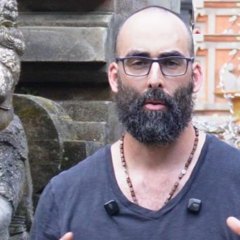
Győrben 6 bátor shiatsu terapeuta / tanuló közreműködésével egy napos műhely munkát végeztünk.
Az esemény fő témája a test előkészítése és a nei gong gyakorlatából vett alsó dan tien munka volt. Mindez a hara tudatosság gyakorlati vetületeiben.
- Mi a hara? Japán kifejezés a medicína és a harcművészetek területeiről, a medence és a rekeszizom által határolt területet, a hasüreget jelöli, fizikai és energetikai értelemben is.
- Mi az alsó dan tien? Egy kölcsönvett kifejezés, ami ugyan arra a területre utalhat , mint a “hara”. A kínai alkímiai gyakorlatok, a nei dan-ból származó kifejezés: dan = elixír, tien=mező. A kínai orvoslás és a nei gong, qigong de még a taiji is kikölcsönözte a kifejezést. Különböző gyakorlatokban, különböző dolgot jelent. Alapvetően fizikai területre és energetikai területre ( központra ) is utal.
Első körben megvizsgáltuk ki, mit ért, személy szerint, “hara” alatt és kinek, mit jelent a hara-tudatosság. Ez a kifejezés gyakran használatos a shiatsu képzéseken és úgy általában a shiatsu terminológiában, és a megfigyeléseim szerint eltérően kivitelezik. Úgyhogy, ezután következett egy elméleti szakasz az alsó dan tien pontos helyéről, és az ég előtti és ég utáni energetikában ( Qi ) elfoglalt helyéről, funkcióiról. Megvizsgáltuk azt is a gyakorlatban, hogy valójában, mit talál a figyelmünk a hasüregben. Szó esett a figyelemről is részletesebben és az elméről ( Xin – Szív elme ).
A nei gong ( kínai eredetű , belső művelés ) gyakorlatában az alsó dan tien munkának meghatározott állomásai vannak. Szükséges mindenek előtt megtalálni az alsó dan tient, ez egy olyan pont, amin nagyon sokan elvéreznek. A másik szokásos félreértés, hogy a tanulók azt hiszik, hogy van alsó dan tienjük. A helye tény és való, hogy megvan mindenkinél, aki hasüreggel rendelkezik, de mint energetikai központ, a nei gong értelmében, nincs. A módszer következetes, így logikus is, hogy olyan szakasszal kezd, amely először felfedezi a területet, és a dan tien pontos helyét. Na, de, hogy dolgozzunk valamivel, ami nincs? Ez a művészet része és a következetes metodikájé / gyakorlásé… hogy legyen!
Szintézis:
A bevezető testi és nei gong gyakorlatoknak köszönhetően sikerült minden résztvevő szemét felnyitni, kinek kicsit, kinek jobban. Annak ellenére, hogy ismerték a hara tudatosság fogalmát, és gyakorolták is, ez a műhely munka új felismeréseket hozott. A szándék és figyelem viszonyára is sikerült jobban rálátnunk és az egyéni tapasztalatok szerint sokan bepillantást nyertek egy tisztább, szándék mentesebb érintésbe, anélkül, hogy egy szándék mentesebb érintés szándékával közelítettek volna. Tehát a test felkészítése, a figyelem és a légzés szabályzása lehetővé tett egy új, másfajta tapasztalást.
Közös felismerés volt, hogy ha a figyelem az alsó dan tien területén tud tartózkodni ( nem egyszerű ! ) , akkor egy mély nyugalom jelenik meg a kezelőben, ami kihat a páciensre is. Mi több, körbe öleli. Az is kiderült, hogy kiérezhető az érintésből a hozzáadott szándék, az érintés minősége így, megváltozik. Nagyon fontos dolog, hogy többlet információt, vihetünk be az érintéssel. Felveti a kérdést, hogy mennyiben függ a páciensbe bevitt információk mennyisége a shiatsu terapeuta testi, energetikai minőségétől.
Közös felismerés volt továbbá, hogy az egészséges határokat is természetesen tartották azok, akik az alsó dan tienben , vagy ahhoz közel tudták pihentetni a figyelmüket. Miközben mégis létrejött egy kapcsolódás.Ez úgy történt meg, hogy nem érkezett erre vonatkozó direkt utasítás, egyáltalán. Ha magunkban fent tudunk tartani meghatározott minőségeket, és testileg is felkészültek vagyunk, akkor nincs szükség hozzáadott “cselekvésre”. Az alsó dan tiennel végzett munkák pedig nagyon messzire mutatnak. Ez az egy nap műhely munka, egy bevezető kísérletnek is tekinthető , annak a munkának a viszonylatában, amit egy shiatsu terapeuta magán végezhet évek nei gong gyakorlása alatt.
A kimenetel és a felismerések nem leptek meg, ami meglepett, az hogy ezek mégis megtörténtek és ennyire érthetően, élesen, világosan. A nei gong gyakorlatának integrációja azért nagyon könnyű a shiatsuba, vagy tuinába, mert közös gyökérrel rendelkeznek. A kínai orvoslás is a nei gongból ered, így érthető, hogy ez a két energetikai testmunka is, amely bevallottan a kínai orvoslásra alapszik, könnyedén gazdagítható a nei gong gyakorlás által.
Alsó dan tienről bővebben: Itt
In Győr, with the participation of 6 brave shiatsu therapists / students, we did a one-day workshop.
The main topic of the event was preparing the body and lower dan tian work taken from nei gong practice. All of this in the practical aspects of hara awareness.
- What is hara? A Japanese term from the fields of medicine and martial arts, denoting the area bounded by the pelvis and the diaphragm, the abdominal cavity, in both a physical and an energetic sense.
- What is the lower dan tian? A borrowed term, which may refer to the same area as “hara”. A term originating from the Chinese alchemical practices, nei dan: dan = elixir, tian = field. Chinese medicine and nei gong, qi gong and even taiji have borrowed the term. In different practices it means different things. Basically it refers to a physical area and also to an energetic area ( centre ).
In the first round we examined what each person personally understands by “hara”, and what hara awareness means to whom. This term is often used in shiatsu training and in shiatsu terminology in general, and according to my observations it is carried out differently. So next came a theoretical section on the exact location of the lower dan tian, and its place and functions in before-heaven and after-heaven energetics ( qi ). We also examined in practice what our attention actually finds in the abdominal cavity. There was also more detailed discussion of attention and of the mind ( Xin, Heart-mind ).
In the practice of nei gong ( of Chinese origin, inner cultivation ), work on the lower dan tian has defined stations. First of all it is necessary to find the lower dan tian, and this is a point where very many bleed out. Another common misunderstanding is that students believe they have a lower dan tian. Its place is indeed a fact, it is there in everyone who has an abdominal cavity, but as an energetic centre, in the nei gong sense, it is not. The method is consistent, so it is also logical that it begins with a phase that first discovers the area and the exact location of the dan tian. But then, how do we work with something that does not exist? That is part of the art, and of the consistent methodology / practice… so that it comes to be!
Synthesis:
Thanks to the introductory body and nei gong exercises, we managed to open the eyes of every participant, of some a little, of others more. Even though they knew the concept of hara awareness and practised it too, this workshop brought new insights. We also managed to get a better view of the relationship between intention and attention, and according to individual experiences many gained a glimpse of a clearer, more intention-free touch, without having approached it with the intention of an intention-free touch. So preparing the body and regulating attention and breathing made possible a new, different kind of experience.
A shared realisation was that if the attention can stay in the area of the lower dan tian ( not easy! ), then a deep calm appears in the practitioner giving the treatment, which affects the patient too. What is more, it envelops them. It also turned out that added intention can be felt in the touch, and so the quality of the touch changes. It is a very important thing that we can bring extra information in with touch. It raises the question of how far the amount of information brought into the patient depends on the physical and energetic quality of the shiatsu therapist.
A further shared realisation was that those who could rest their attention in or near the lower dan tian also naturally kept healthy boundaries. And still a connection came about. This happened without any direct instruction about it at all. If we can maintain certain qualities within ourselves, and are physically prepared too, then there is no need for added “doing”. And work with the lower dan tian points very far. This one-day workshop can also be regarded as an introductory experiment, in relation to the work that a shiatsu therapist can do on themselves over years of nei gong practice.
The outcome and the realisations did not surprise me; what surprised me was that they nevertheless happened, and so understandably, sharply, clearly. The integration of nei gong practice into shiatsu or tuina is very easy because they have a common root. Chinese medicine also originates from nei gong, so it is understandable that these two energetic bodywork methods, which admittedly are based on Chinese medicine, can also easily be enriched by nei gong practice.
More on the lower dan tian: Here
In Győr haben wir mit 6 mutigen Shiatsu-Therapeutinnen und -Therapeuten bzw. Lernenden einen eintägigen Workshop gemacht.
Hauptthema der Veranstaltung waren die Vorbereitung des Körpers und die Arbeit mit dem unteren Dan Tian aus der Praxis des Nei Gong. All das in den praktischen Aspekten der Hara-Bewusstheit.
- Was ist das Hara? Ein japanischer Begriff aus den Bereichen Medizin und Kampfkunst, der den vom Becken und vom Zwerchfell begrenzten Bereich, die Bauchhöhle, bezeichnet, sowohl im physischen als auch im energetischen Sinn.
- Was ist das untere Dan Tian? Ein entlehnter Begriff, der auf denselben Bereich verweisen kann wie das „Hara“. Ein Begriff aus den chinesischen alchemistischen Praktiken, dem Nei Dan: Dan = Elixier, Tian = Feld. Die chinesische Medizin und das Nei Gong, das Qi Gong und sogar das Taiji haben den Begriff übernommen. In verschiedenen Praktiken bedeutet er Verschiedenes. Grundsätzlich bezieht er sich sowohl auf einen physischen Bereich als auch auf einen energetischen Bereich (ein Zentrum).
In einer ersten Runde haben wir untersucht, was jede und jeder persönlich unter „Hara“ versteht und was Hara-Bewusstheit für wen bedeutet. Dieser Ausdruck wird in Shiatsu-Ausbildungen und überhaupt in der Shiatsu-Terminologie oft verwendet, und nach meinen Beobachtungen wird er unterschiedlich umgesetzt. Deshalb folgte danach ein theoretischer Teil über die genaue Lage des unteren Dan Tian sowie über seinen Platz und seine Funktionen in der vorhimmlischen und nachhimmlischen Energetik (Qi). Wir haben auch in der Praxis untersucht, was unsere Aufmerksamkeit in der Bauchhöhle tatsächlich findet. Ausführlicher ging es auch um die Aufmerksamkeit und um den Geist (Xin, Herz-Geist).
In der Praxis des Nei Gong (chinesischen Ursprungs, innere Kultivierung) hat die Arbeit mit dem unteren Dan Tian bestimmte Stationen. Zuallererst muss man das untere Dan Tian finden, und an diesem Punkt scheitern sehr viele. Das andere übliche Missverständnis ist, dass die Lernenden glauben, sie hätten ein unteres Dan Tian. Seine Stelle ist zwar tatsächlich bei jedem vorhanden, der eine Bauchhöhle hat, aber als energetisches Zentrum im Sinne des Nei Gong gibt es es nicht. Die Methode ist folgerichtig, und so ist es auch logisch, dass sie mit einem Abschnitt beginnt, in dem zuerst der Bereich und die genaue Lage des Dan Tian erforscht werden. Na, aber wie sollen wir mit etwas arbeiten, das es nicht gibt? Das ist Teil der Kunst und der folgerichtigen Methodik / Praxis… dass es entsteht!
Synthese:
Dank der einführenden Körper- und Nei-Gong-Übungen ist es gelungen, allen Teilnehmenden die Augen zu öffnen, den einen ein wenig, den anderen mehr. Obwohl sie den Begriff der Hara-Bewusstheit kannten und auch geübt hatten, brachte dieser Workshop neue Erkenntnisse. Auch auf das Verhältnis von Absicht und Aufmerksamkeit haben wir einen besseren Blick bekommen, und nach den persönlichen Erfahrungen haben viele einen Einblick in eine klarere, absichtsfreiere Berührung gewonnen, ohne sich ihr mit der Absicht einer absichtsfreieren Berührung genähert zu haben. Die Vorbereitung des Körpers und die Regulierung von Aufmerksamkeit und Atmung haben also eine neue, andersartige Erfahrung möglich gemacht.
Eine gemeinsame Erkenntnis war, dass, wenn die Aufmerksamkeit im Bereich des unteren Dan Tian verweilen kann (nicht einfach!), in der behandelnden Person eine tiefe Ruhe entsteht, die sich auch auf den Patienten auswirkt. Mehr noch, sie umhüllt ihn. Es zeigte sich auch, dass man eine hinzugefügte Absicht aus der Berührung heraus spüren kann und sich die Qualität der Berührung dadurch verändert. Ganz wichtig ist, dass wir über die Berührung zusätzliche Information hineinbringen können. Das wirft die Frage auf, inwieweit die Menge der in den Patienten eingebrachten Information von der körperlichen und energetischen Qualität der Shiatsu-Therapeutin oder des Shiatsu-Therapeuten abhängt.
Eine gemeinsame Erkenntnis war außerdem, dass diejenigen, die ihre Aufmerksamkeit im unteren Dan Tian oder in seiner Nähe ruhen lassen konnten, ganz natürlich auch gesunde Grenzen wahrten. Während trotzdem eine Verbindung entstand. Das geschah, ohne dass es dazu überhaupt eine direkte Anweisung gegeben hätte. Wenn wir bestimmte Qualitäten in uns aufrechterhalten können und auch körperlich vorbereitet sind, dann braucht es kein zusätzliches „Tun“. Und die Arbeit mit dem unteren Dan Tian weist sehr weit. Dieser eine Workshoptag kann auch als einführendes Experiment betrachtet werden, im Verhältnis zu der Arbeit, die eine Shiatsu-Therapeutin oder ein Shiatsu-Therapeut in Jahren der Nei-Gong-Praxis an sich selbst leisten kann.
Das Ergebnis und die Erkenntnisse haben mich nicht überrascht, überrascht hat mich, dass sie dennoch eingetreten sind, und zwar so verständlich, scharf und klar. Die Integration der Nei-Gong-Praxis ins Shiatsu oder ins Tuina ist deshalb so leicht, weil sie eine gemeinsame Wurzel haben. Auch die chinesische Medizin stammt aus dem Nei Gong, und so ist verständlich, dass sich auch diese beiden energetischen Körperarbeiten, die eingestandenermaßen auf der chinesischen Medizin beruhen, durch die Nei-Gong-Praxis mühelos bereichern lassen.
Mehr über das untere Dan Tian: Hier