
Kan és Li – Tűz és Víz
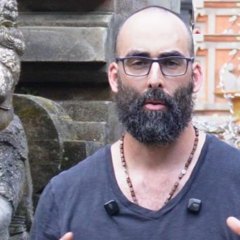
“Most érkeztem a kínai Wuhanba, pár napra. Wuhan mindig összezavar, mintha semmi sem lenne a helyén, az elrendezésének nem látom értelmét, és mindent olyan nehéz megoldani !Mivel egy néhány hét múlva kezdődő 14 napos alkímiai tanfolyamra készülök , elmémben csak az alkímia teóriáinak van helye. Ez lesz az első alkalom, hogy egy hosszabb kurzust tartok a taoista meditációról, nagyon izgatott vagyok. Már régóta szerettem volna ezt, mivel manapság a meditáció a legfontosabb számomra, de ez ideig erre nem volt lehetőségem. Az alkímia elsőre zavarosnak tűnhet, de ha lépésről-lépésre lebontják, valójában nem túl nehéz követni.
Talán kicsit különös azok számára, akik nem szoktak hozzá ehhez a nyelvezethez vagy a folyamatokhoz, de következzen néhány megjegyzés, a régi jegyzetfüzetemből az alkímiai eljárásokra vonatkozólag. Mindig érdekes szembetalálkozni és újraolvasni a régi jegyzeteket.
Az alkímia nyelvén a Szív és a Vese spirituális energiáit Li és Kan energiáiként ismeretes. Ez az a két trigram, ami Tűz és Víz néven ismeretes a Yi Jing körökben. A Li két folytonos vonalból áll, egy szaggatott Yin vonallal a közepén. Kan ennek az ellenkezője, egy folytonos Yang vonalat közre fogó két szaggatott Yin vonalból épül fel.
A Qi Gong és a Nei Gong gyakorlatokon belül a Tűz és a Víz egyesülése arra utal, hogy a Szív és a Vese Qi-jét olyan állapotba hozza, hogy egymással kommunikálhassanak. Itt egy alkímiai reakció van közöttük, amelynek következtében a Szív izgatottabb működésű energiája egyensúlyozza a Vesék visszahúzódóbb energiáját. Ez olyan energetikai szinten zajlik, amelyet a törzsön belül a Qi áramlásának tapintható érzetei kísérnek, és különféle reakciókat hoznak létre a szervezetben.
A Tűz és a Víz alkímiai kölcsönhatása a Taoista meditációs gyakorlatban egy kicsit másféle alakot ölt, itt inkább a Szív és a Vese mentális / spirituális / pszichés aspektusairól beszélünk, mint energiájukról. Ebben az esetben a megszerzett elme és a veleszületett elme közötti különbséget tárgyaljuk, elsősorban az egyensúly hiányát, amely a tudatunkat két részre osztja. Li és Kan trigramjait az alábbiak szerint lehet taglalni.
Li-nek két Yang vonala van kívül , amely a bölcsességen alapuló igaz tudást mutatja. Sajnos, e két vonal középpontjában egyetlen szaggatott Yin vonal található, amely a torzításokat és a megszerzett tudást képviseli, ami akadályoz bennünket abban, hogy elérjük a bölcsességünket, vagy támaszkodjunk rá.
Kan-nak két szaggatott Yin vonala a világi gondolatokat és triviális kötődéseket képviselik. Egyetlen folytonos Yang vonal körül helyezkednek el, amely a valóság természetének intuitív megértését jelenti. Hozzáférhetnénk ehhez az intuitív tudáshoz (vannak akik alkalmanként meg is teszik), ha ki tudnánk ásni a világi gondolatok halma alól, ahová temettetett.
Filozófiai értelemben a Tüzet a testben emelkedőnek, a Vizet pedig süllyedőnek tartják. A Tûz fent , a Szív szintjén található, nyilván, érzelmeink által táplálva felfelé lángol. Ezért távolodik a Víz energiától , holott keveredniük kellene. A Víz lefelé süllyed, ez esszenciánk elpazarlásával jár, pedig azokat megfelelő módon őriznünk kellene életünk során. Ennek eredményeként távolodik a Szív energiájától. Még távolabb kerül egymástől a két erő. Szétválásuk az öregedési folyamatot sietteti és a megszerzett tudat ( másnéven egó ) képződését tovább gyorsítja. A felismerés így még távolabb kerül tőlünk, mivel a mindennapi gondolatok és a kondicionált gondolkodás veszik át az irányítást. A szellem emelkedésének lehetősége elérhetetlen, amíg az elme eszköze befolyásolja a tudatot.
Hogy ez ne történjen meg, az alkímia segítségével, elegyítenünk kell a Tűz és a Víz energiáit, hogy azok a testben a Sárga udvarként ismert helyen találkozhassanak Ha azt akarjuk, hogy találkozzanak, akkor meg kell találnunk a Sárkányt és a Tigrist, és rá kell vegyük őket az egyesülésre. Az ilyen alkímiai nyelv elsőre megtévesztő lehet, különösen akkor, ha többrétegű. De nézzük meg, hogy részekre tudjuk e bontani, hogy értelmet nyerjen.
Először is, a Sárkány és a Tigris egyesülése különféle dolgokat jelent különböző szinteken.A Jing szintjén (fizikai állapot) valóban szexuális gyakorlatokra utalhat, amelyet páros művelésként ismerünk. A férfi a Sárkány és a nõ a Tigris. A speciális tantrikus és energetikai gyakorlatok lehetővé teszik mindkettő számára, fizaikai egyesülés által, hogy ötvözzék energiáikat, és így a Tűz és a Víz esszenciái keveredjenek. Ez a Sárkány és Tigris energiák legalacsonyabb szintű megnyilvánulásának tekinthető, A taoista tradíciókban csupán a fizikai test jó egészségi állapotának megalapozására használták. A Sárkány és a Tigris második szintje a Máj és a Tüdő energiáinak keveredésére utal, amelyek a Qi szintjén ( energia test) létesíthetnek kapcsolatot egymással. Ez számos Qi Gong gyakorlat forma alkalmazása során végbemehet.
A harmadik szint utalhat a toboz és agyalapi mirigy spirituális energiáinak keverésére, aminek eredménye egy olyan folyadék termelődése, amely a testen végég haladva helyrállítja annak számos szövetének egészségét. Hogy őszinte legyek, valószínű hogy ez a Sárkány és Tigris legritkábban használt definíciója. ezoterikus taoista értelmezés helyezi előtérbe a fizikai halhatatlanságot a spirituálisssal szemben. A végső (és leginkább szükséges az alkímiai meditációs gyakorlatokhoz) a Li trigramon belüli Yin vonal találkozása a Kan-trigramban lévő Yang vonallal. Ily módon a Sárkány és a Tigris Yin és Yang jelképei visszafordultak a fizikai polaritásukból, így lett a Sárkány Yin és a Tigris Yang; ami, általában fordítva van.
Ha kivonjuk a Yin vonalat a Li trigram középpontjából, megtaláljuk a Sárkányt. Ezt előmozdítani csak a Szív-elme (Xin) igazi csendje megtalálásával lehet . Ez okozza a Yin vonal süllyedését, ami a Yin alaptermészete. A gyakorlat korai szakaszában lehetővé teszi, hogy a Szív Tűz energiája stabilizálódjon és ne emelkedjen, mivel gyökeret vert a testben a Yin ‘Sárkány’ vonal által. Ugyanígy kell mozgásra késztetni a Vesék Yang ‘Tigris’ vonalát, ami emelkedésre ösztönzi. Ez felemeli a Kan ‘Víz’ energiát, amely megakadályozza, a korábbi süllyedését. Így az öregedési folyamat lelassul és az alkímia kezdeti szakaszaiba léptünk.
Tűz és Víz
Ha ezt elég hosszú ideig és elég hatékonyan tudjuk csinálni, akkor a két középvonal találkozhat a Sárga udvarban. Ennek a két vonalnak a párosodása a Kan és Li középvonalainak felcserélését eredményezi. Az eredmény a Qian és Kun trigramok kialakulása, amelyek tiszta Yang (három folytonos vonal) és tiszta Yin (három szaggatott vonal). Most a Tűz és a Víz eltűnik, és alkímiailag a Menny és a Föld jön létre. Ez harmóniát kölcsönöz a testnek, amely a gyakorlót igazi mozdulatlansághoz vezeti, a veleszületett természet (tudat) megjelenése és a megszerzett elme felbomlása felé.
Mindez előkészület a légzés, elme és szellem mozgásainak megállításához, és a három eredendő kincs fejlesztéséhez, amelyek az alkímiai hatóanyag alakításának kulcs hozzávalói.
A 14 nap folyamán 14 egy órás előadást tartok. Soha nem beszéltem ilyen hosszan tanfolyamon, így ez új kihívás lesz számomra. Beszélni fogok a Nei Jing Tu-ról, a Xiu Zhen Tu-ról, a Can Tong Qi-ről, a Yi Jing Jing-ről és a Xi Sui Jing-ről, valamint személyes tapasztalataimról a gyakorlásban. Mindezt napi szintű több órás gyakorlás mellett.Elfoglalt hetek várnak ránk. Valójában összeszedtük a szükséges felszerelést is, hogy lefilmezhessük az összes ilyen előadást, remélhetőleg ha elkészülnek a felvételek, akkor elérhetővé tehetjük az érdeklődők számára … azoknak, akik képesek lesznek elviselni engem, ahogy 14 órányi alkímiai anyagot oktatok ! Nemáár!” Damo Mitchell
Köszönet mindenért!
Köszönet Tyutyunak és Gyulának, akik a cikk fordítását utólag helyre igazították, magyarították és segédkeztek.
Remélem legalább egy ember számára hasonló utazásnak a lehetőségét fogja elhozni…még 2018-ban fordítottam le ezt a cikket, amely anno az első tartalom volt, amit olvastam az iskolától.
Kan and Li: Fire and Water
“I have just arrived in Wuhan, China, for a few days. Wuhan always confuses me, as if nothing were in its place, I can’t see the sense in its layout, and everything is so hard to sort out!Since I am preparing for a 14-day alchemy course that begins in a few weeks, my mind has room only for the theories of alchemy. This will be the first time I teach a longer course on Daoist meditation, and I am very excited. I have wanted this for a long time, since meditation is the most important thing for me nowadays, but until now I have not had the opportunity. Alchemy can seem confusing at first, but if it is broken down step by step, it is actually not very hard to follow.
Perhaps it is a little strange for those who are not used to this language or these processes, but here are a few notes from my old notebook on the alchemical procedures. It is always interesting to come across old notes and read them again.
In the language of alchemy, the spiritual energies of the Heart and the Kidneys are known as the energies of Li and Kan. These are the two trigrams known as Fire and Water in Yi Jing circles. Li consists of two solid lines, with a broken Yin line in the middle. Kan is the opposite of this: it is built from two broken Yin lines enclosing a solid Yang line.
Within qi gong and nei gong practices, the union of Fire and Water refers to bringing the qi of the Heart and the Kidneys into a state in which they can communicate with each other. Here there is an alchemical reaction between them, as a result of which the more excited, active energy of the Heart balances the more withdrawn energy of the Kidneys. This takes place on an energetic level that is accompanied by tangible sensations of qi flowing within the torso, and it produces various reactions in the organism.
The alchemical interplay of Fire and Water takes a slightly different form in Daoist meditation practice. Here we speak more about the mental / spiritual / psychic aspects of the Heart and the Kidneys than about their energy. In this case we are discussing the difference between the acquired mind and the innate mind, above all the lack of balance that divides our consciousness into two parts. The trigrams of Li and Kan can be discussed as follows.
Li has two Yang lines on the outside, which show true knowledge based on wisdom. Unfortunately, at the centre of these two lines there is a single broken Yin line, which represents the distortions and the acquired knowledge that prevent us from reaching our wisdom or relying on it.
The two broken Yin lines of Kan represent worldly thoughts and trivial attachments. They are placed around a single solid Yang line, which stands for an intuitive understanding of the nature of reality. We could access this intuitive knowledge (some people occasionally do) if we could dig it out from under the heap of worldly thoughts where it has been buried.
In a philosophical sense, Fire is considered to rise in the body and Water to sink. Fire is located above, at the level of the Heart, and, fed by our emotions, it naturally blazes upwards. This is why it moves away from the Water energy, although they should mix. Water sinks downwards, which involves wasting our essence, even though we should preserve it properly throughout our lives. As a result it moves away from the energy of the Heart. The two forces end up even further from each other. Their separation hastens the ageing process and further accelerates the formation of the acquired consciousness ( also known as the ego ). Realisation thus moves even further away from us, since everyday thoughts and conditioned thinking take over control. The possibility of the spirit rising is out of reach as long as the instrument of the mind influences consciousness.
To prevent this from happening, with the help of alchemy we must blend the energies of Fire and Water so that they can meet in the place in the body known as the Yellow Court. If we want them to meet, we must find the Dragon and the Tiger, and we must persuade them to unite. Such alchemical language can be misleading at first, especially when it has several layers. But let us see whether we can break it into parts so that it makes sense.
First of all, the union of the Dragon and the Tiger means different things on different levels.On the level of jing (the physical state) it can indeed refer to sexual practices, known as dual cultivation. The man is the Dragon and the woman is the Tiger. Special tantric and energetic practices allow both of them, through physical union, to combine their energies, so that the essences of Fire and Water mix. This can be regarded as the lowest-level manifestation of the Dragon and Tiger energies. In the Daoist traditions it was used only to establish good health of the physical body. The second level of the Dragon and the Tiger refers to the mixing of the energies of the Liver and the Lungs, which can establish a connection with each other on the level of qi ( the energy body ). This can take place through the application of many forms of qi gong practice.
The third level can refer to the mixing of the spiritual energies of the pineal gland and the pituitary gland, the result of which is the production of a fluid that, travelling through the whole body, restores the health of its many tissues. To be honest, this is probably the least used definition of the Dragon and the Tiger. This esoteric Daoist interpretation puts physical immortality in the foreground over the spiritual. The final one (and the one most needed for the alchemical meditation practices) is the meeting of the Yin line within the Li trigram with the Yang line in the Kan trigram. In this way the Yin and Yang symbols of the Dragon and the Tiger are turned back from their physical polarity, so the Dragon becomes Yin and the Tiger Yang; which is usually the other way round.
If we extract the Yin line from the centre of the Li trigram, we find the Dragon. This can only be promoted by finding the true stillness of the Heart-mind (Xin). This causes the Yin line to sink, which is the basic nature of Yin. In the early stage of the practice it allows the Fire energy of the Heart to stabilise and not rise, because it has been rooted in the body by the Yin ‘Dragon’ line. In the same way, the Yang ‘Tiger’ line of the Kidneys must be set in motion, which encourages it to rise. This lifts up the Kan ‘Water’ energy, which prevents its earlier sinking. In this way the ageing process slows down and we have entered the initial stages of alchemy.
Fire and Water
If we can do this for long enough and effectively enough, the two central lines can meet in the Yellow Court. The pairing of these two lines results in the exchange of the central lines of Kan and Li. The result is the formation of the Qian and Kun trigrams, which are pure Yang (three solid lines) and pure Yin (three broken lines). Now Fire and Water disappear, and alchemically Heaven and Earth come into being. This gives harmony to the body, which leads the practitioner to true stillness, towards the emergence of the innate nature (consciousness) and the dissolution of the acquired mind.
All this is preparation for stopping the movements of breath, mind and spirit, and for developing the three original treasures, which are the key ingredients in shaping the alchemical agent.
During the 14 days I will give 14 one-hour lectures. I have never spoken this long at a course, so this will be a new challenge for me. I will talk about the Nei Jing Tu, the Xiu Zhen Tu, the Can Tong Qi, the Yi Jing Jing and the Xi Sui Jing, as well as my personal experiences in the practice. All of this alongside several hours of practice every day. Busy weeks await us. In fact, we have also gathered the necessary equipment so that we can film all of these lectures, and hopefully, once the recordings are done, we can make them available to those who are interested … to those who will be able to put up with me teaching 14 hours of alchemical material! Oh, come on!” Damo Mitchell
Thank you for everything!
Thanks to Tyutyu and Gyula, who afterwards corrected the translation of the article, polished its Hungarian and helped.
I hope it will bring the possibility of a similar journey for at least one person… I translated this article back in 2018. It was the first content I read from the school.
Kan und Li: Feuer und Wasser
„Ich bin gerade für ein paar Tage im chinesischen Wuhan angekommen. Wuhan verwirrt mich immer, als wäre nichts an seinem Platz, ich sehe keinen Sinn in seiner Anlage, und alles ist so schwer zu erledigen!Da ich mich auf einen 14-tägigen Alchemiekurs vorbereite, der in einigen Wochen beginnt, ist in meinem Geist nur Platz für die Theorien der Alchemie. Es wird das erste Mal sein, dass ich einen längeren Kurs über daoistische Meditation halte, und ich bin sehr aufgeregt. Das wollte ich schon lange, da Meditation für mich heutzutage das Wichtigste ist, aber bisher hatte ich keine Gelegenheit dazu. Alchemie kann auf den ersten Blick verwirrend wirken, doch wenn man sie Schritt für Schritt aufschlüsselt, ist sie eigentlich gar nicht so schwer nachzuvollziehen.
Vielleicht ist es für diejenigen, die an diese Sprache oder diese Prozesse nicht gewöhnt sind, etwas seltsam, aber hier folgen einige Bemerkungen aus meinem alten Notizbuch zu den alchemistischen Verfahren. Es ist immer interessant, auf alte Notizen zu stoßen und sie wieder zu lesen.
In der Sprache der Alchemie sind die spirituellen Energien von Herz und Nieren als die Energien von Li und Kan bekannt. Das sind die beiden Trigramme, die in Yi-Jing-Kreisen als Feuer und Wasser bekannt sind. Li besteht aus zwei durchgehenden Linien mit einer unterbrochenen Yin-Linie in der Mitte. Kan ist das Gegenteil davon: Es besteht aus zwei unterbrochenen Yin-Linien, die eine durchgehende Yang-Linie umschließen.
Innerhalb der Qi-Gong- und Nei-Gong-Praktiken bezieht sich die Vereinigung von Feuer und Wasser darauf, das Qi von Herz und Nieren in einen Zustand zu bringen, in dem sie miteinander kommunizieren können. Hier findet zwischen ihnen eine alchemistische Reaktion statt, durch die die erregtere Energie des Herzens die zurückgezogenere Energie der Nieren ausgleicht. Dies geschieht auf einer energetischen Ebene, die von spürbaren Empfindungen des Qi-Flusses im Rumpf begleitet wird und verschiedene Reaktionen im Organismus hervorruft.
Die alchemistische Wechselwirkung von Feuer und Wasser nimmt in der daoistischen Meditationspraxis eine etwas andere Gestalt an; hier sprechen wir eher über die mentalen / spirituellen / psychischen Aspekte von Herz und Nieren als über ihre Energie. In diesem Fall erörtern wir den Unterschied zwischen dem erworbenen Geist und dem angeborenen Geist, vor allem das fehlende Gleichgewicht, das unser Bewusstsein in zwei Teile spaltet. Die Trigramme Li und Kan lassen sich folgendermaßen erläutern.
Li hat außen zwei Yang-Linien, die das wahre, auf Weisheit beruhende Wissen zeigen. Leider befindet sich in der Mitte dieser beiden Linien eine einzelne unterbrochene Yin-Linie, die die Verzerrungen und das erworbene Wissen darstellt, die uns daran hindern, unsere Weisheit zu erreichen oder uns auf sie zu stützen.
Die beiden unterbrochenen Yin-Linien von Kan stehen für weltliche Gedanken und triviale Anhaftungen. Sie liegen um eine einzelne durchgehende Yang-Linie herum, die ein intuitives Verständnis vom Wesen der Wirklichkeit bedeutet. Wir könnten Zugang zu diesem intuitiven Wissen haben (manche haben ihn gelegentlich auch), wenn wir es unter dem Haufen weltlicher Gedanken hervorgraben könnten, unter dem es begraben wurde.
Im philosophischen Sinne gilt das Feuer im Körper als aufsteigend und das Wasser als absinkend. Das Feuer befindet sich oben, auf der Höhe des Herzens, und lodert, von unseren Emotionen genährt, natürlich nach oben. Deshalb entfernt es sich von der Wasserenergie, obwohl sich die beiden vermischen sollten. Das Wasser sinkt nach unten, und das geht mit der Verschwendung unserer Essenz einher, obwohl wir sie im Laufe unseres Lebens angemessen bewahren sollten. Infolgedessen entfernt es sich von der Energie des Herzens. Die beiden Kräfte geraten noch weiter auseinander. Ihre Trennung beschleunigt den Alterungsprozess und treibt die Bildung des erworbenen Bewusstseins (auch Ego genannt) weiter voran. Die Erkenntnis rückt so noch weiter von uns weg, da die alltäglichen Gedanken und das konditionierte Denken die Kontrolle übernehmen. Ein spiritueller Aufstieg bleibt unerreichbar, solange das Werkzeug des Geistes das Bewusstsein beeinflusst.
Damit das nicht geschieht, müssen wir mit Hilfe der Alchemie die Energien von Feuer und Wasser vermengen, damit sie sich im Körper an dem Ort treffen können, der als Gelber Hof bekannt ist. Wenn wir wollen, dass sie sich treffen, müssen wir den Drachen und den Tiger finden und sie zur Vereinigung bewegen. Eine solche alchemistische Sprache kann anfangs irreführend sein, besonders wenn sie vielschichtig ist. Aber schauen wir, ob wir sie in Teile zerlegen können, damit sie Sinn ergibt.
Zunächst einmal bedeutet die Vereinigung von Drache und Tiger auf verschiedenen Ebenen verschiedene Dinge.Auf der Ebene des Jing (physischer Zustand) kann sie tatsächlich auf sexuelle Praktiken verweisen, die als duale Kultivierung bekannt sind. Der Mann ist der Drache und die Frau der Tiger. Spezielle tantrische und energetische Praktiken ermöglichen es beiden, durch körperliche Vereinigung ihre Energien zu verbinden, sodass sich die Essenzen von Feuer und Wasser vermischen. Dies kann als die niedrigste Ausdrucksform der Drachen- und Tigerenergien betrachtet werden. In den daoistischen Traditionen wurde sie lediglich dazu genutzt, eine gute Gesundheit des physischen Körpers zu begründen. Die zweite Ebene von Drache und Tiger bezieht sich auf die Vermischung der Energien von Leber und Lunge, die auf der Ebene des Qi (Energiekörper) miteinander in Verbindung treten können. Das kann bei der Anwendung zahlreicher Qi-Gong-Übungsformen geschehen.
Die dritte Ebene kann sich auf die Vermischung der spirituellen Energien von Zirbeldrüse und Hirnanhangdrüse beziehen, deren Ergebnis die Bildung einer Flüssigkeit ist, die durch den ganzen Körper wandert und die Gesundheit seiner vielen Gewebe wiederherstellt. Ehrlich gesagt ist das wahrscheinlich die am seltensten verwendete Definition von Drache und Tiger. Diese esoterische daoistische Deutung stellt die physische Unsterblichkeit über die spirituelle. Die letzte (und für die alchemistischen Meditationspraktiken am meisten benötigte) ist das Zusammentreffen der Yin-Linie im Trigramm Li mit der Yang-Linie im Trigramm Kan. Auf diese Weise wurden die Yin- und Yang-Symbole von Drache und Tiger aus ihrer physischen Polarität umgekehrt, sodass der Drache Yin und der Tiger Yang wurde; was gewöhnlich umgekehrt ist.
Wenn wir die Yin-Linie aus der Mitte des Trigramms Li herauslösen, finden wir den Drachen. Das lässt sich nur fördern, indem man die wahre Stille des Herz-Geistes (Xin) findet. Das lässt die Yin-Linie absinken, was die Grundnatur des Yin ist. In der frühen Phase der Praxis ermöglicht es, dass sich die Feuerenergie des Herzens stabilisiert und nicht aufsteigt, da sie durch die Yin-Linie ‚Drache‘ im Körper Wurzeln geschlagen hat. Ebenso muss die Yang-Linie ‚Tiger‘ der Nieren in Bewegung gebracht werden, was sie zum Aufsteigen anregt. Das hebt die Kan-Energie ‚Wasser‘ an, was ihr früheres Absinken verhindert. So verlangsamt sich der Alterungsprozess, und wir sind in die Anfangsstadien der Alchemie eingetreten.
Feuer und Wasser
Wenn wir das lange genug und wirksam genug tun können, können sich die beiden Mittellinien im Gelben Hof treffen. Die Paarung dieser beiden Linien führt zum Austausch der Mittellinien von Kan und Li. Das Ergebnis ist die Entstehung der Trigramme Qian und Kun, die reines Yang (drei durchgehende Linien) und reines Yin (drei unterbrochene Linien) sind. Nun verschwinden Feuer und Wasser, und alchemistisch entstehen Himmel und Erde. Das verleiht dem Körper Harmonie, die den Übenden zu wahrer Stille führt, hin zum Hervortreten der angeborenen Natur (des Bewusstseins) und zur Auflösung des erworbenen Geistes.
All das ist Vorbereitung darauf, die Bewegungen von Atem, Verstand und Geist anzuhalten und die drei ursprünglichen Schätze zu entwickeln, die die Schlüsselzutaten für die Bildung des alchemistischen Wirkstoffs sind.
Im Laufe der 14 Tage halte ich 14 einstündige Vorträge. Ich habe noch nie so lange auf einem Kurs gesprochen, das wird also eine neue Herausforderung für mich. Ich werde über das Nei Jing Tu, das Xiu Zhen Tu, das Can Tong Qi, das Yi Jing Jing und das Xi Sui Jing sprechen, sowie über meine persönlichen Erfahrungen in der Praxis. All das neben täglich mehreren Stunden Übung. Uns erwarten arbeitsreiche Wochen. Tatsächlich haben wir auch die nötige Ausrüstung zusammengestellt, um all diese Vorträge filmen zu können, und hoffentlich können wir die Aufnahmen, wenn sie fertig sind, den Interessierten zugänglich machen … denjenigen, die es aushalten, mir zuzusehen, wie ich 14 Stunden alchemistischen Stoff unterrichte! Ach, komm schon!“ Damo Mitchell
Danke für alles!
Dank an Tyutyu und Gyula, die die Übersetzung des Artikels nachträglich korrigiert, in gutes Ungarisch gebracht und mitgeholfen haben.
Ich hoffe, dass er wenigstens einem Menschen die Möglichkeit einer ähnlichen Reise eröffnet… Ich habe diesen Artikel schon 2018 übersetzt; er war damals der erste Inhalt, den ich von der Schule gelesen habe.